
India’s civilizational myths have both carried and shaped its social attitudes, whether in caste or gender. It’s important, necessary even, for modern writers exploring these epics to go beyond the established narratives, give voice to the marginalized and the ones discriminated against.
Few reimaginings and reinterpretations have had the radical impact of The Liberation of Sita. Its author, P. Lalita Kumari—known more popularly by her pen name, Volga—follows the tradition that AK Ramanujan described in 300 Ramayanas, that of the validity and importance of multiple possibilities, multiple versions. Her latest work in translation, On the Banks of the Pampa, translated by Purnima Tammireddy, is the story of Sabari, expanded beyond the few lines in the original texts.
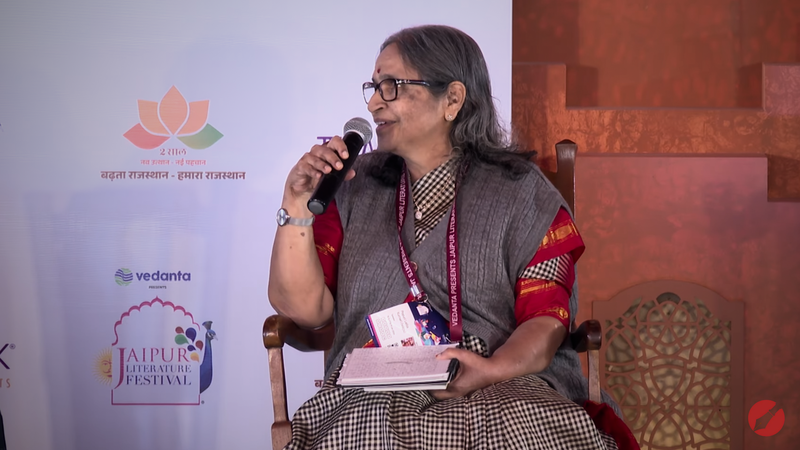
I caught up with Volga on the first day of the Jaipur Literature Festival 2026, where she discussed her intention behind rewriting and reinterpreting mythological texts, trends in Telugu literature, her experience working with different translators, and how the women in her works are more than meets the eye. Edited excerpts:
Amritesh Mukherjee: Is this your first time at the JLF?
Volga: I came in 2017; this is my second time. Diggi Palace had its own beauty. Since it's the first day, I'm still discovering where different things are.
AM: Things are very different at the time of Pattabhipattanam’s publication (2023, translated into English as On the Banks of the Pampa) than when Vimuktha came out (2015, translated as The Liberation of Sita). Has that changed how your book is received, given the angry politics around Rama today?
Volga: No, people received it well in both Telugu and English. No controversies are happening in Telugu because both Telugu states are vibrant in terms of people's movements and radical thought, and they are used to presenting issues in various forms.
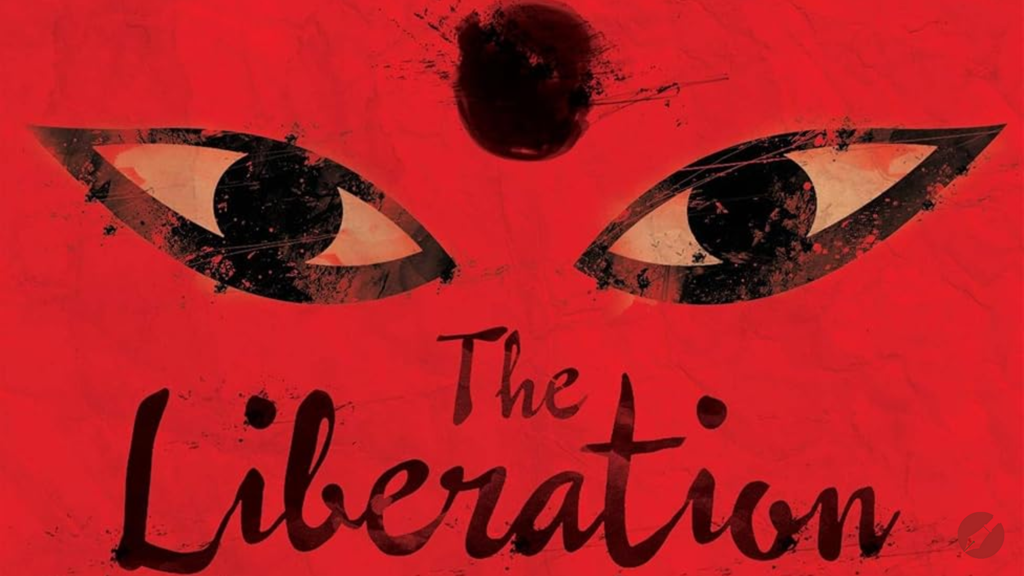
I’ve never tried to raise antagonism against Rama or anyone. I have great respect for Valmiki, the author of the Ramayana, and for how he developed his characters — I never deviated from their basic characteristics. In this book, too, I portrayed Rama as an Aryan king with his own ideology, drawing on Valmiki's Ramayana, which depicts Rama's instinctive tendency toward violence.
AM: There's a stronger shift toward monolithic things today — one language, one version, very little space for disagreement. Your stories also draw richly on folk tales and local versions. Are you conscious of this—that something might be too offensive to say?
Volga: No, I just write what I want. I write with a balance—what the story needs—and I don't unnecessarily create things for controversy.
AM: Authors are often translated by the same translator(s). As someone who's been translated by different translators each time, can you talk about the differences in experience?
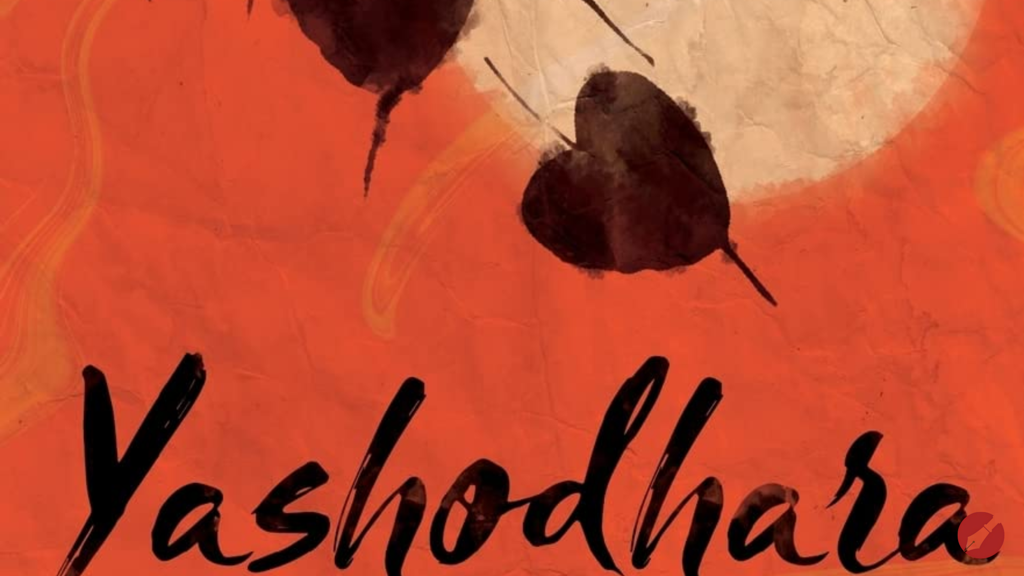
Volga: All the translators chose the books and approached me. First, Vijayasree—a known friend of mine—and Vijay Kumar translated the Liberation of Sita. Immediately after Yashodhara in Telugu was published, PSV Prasad translated it without asking for my permission and sent it to me. I forwarded it to the publisher and told them to publish it if it was good. They liked it and published it.
This time, Purima opted to translate it. It was her first book to translate, which made her a bit scared, but she wanted to. She did a good job in the end. I never go to translators; that situation never occurred to me. And it’s not wrong to approach a translator because they’re good at translating. It’s just that I'm not an English scholar and cannot evaluate whether a translation is good or bad. That’s the publisher’s job, and if they are happy, I'm happy.
AM: There seems to be a renewed interest in translated literature, particularly with the twin International Booker wins. Have you noticed any such shift yourself?
Volga: I don’t know much about the process—what the agents are doing, how they approach others—that area is largely unknown to me. I write in my language, someone gets interested in translating, and translations happen organically. My first translation (Sweccha, translated into English as A Quest for Freedom) was published by NBT (National Book Trust) and was by Ari Sitaramayya, a professor at Michigan University. Without asking me, he translated and sent it to me. I asked him how to publish; he sent it to NBT, they liked it, and published it. It was later translated into many other languages, and last year the Gujarati translation also received the Sahitya Akademi Award.
In Malayalam, it went to the Frankfurt Book Fair and Moscow Book Fair. All of this happened without my intervention; I was simply informed on WhatsApp afterwards.
There's a very interesting phenomenon going on in Telugu. Until 2-3 years ago, we all thought readership was declining and that there were no readers. But suddenly, Ravi Mantri's novel (Amma Diarylo Konni Pageelu) sold one lakh copies, and we were all astonished. It’s not very serious literature, but such novels are important for attracting readers. In the past, too, popular women writers in Telugu increased readership, from which readers would graduate to more serious work.
Now, new publications are appearing, asking writers for rights to publish their work. Publishers are approaching me to publish all my works. Readership is increasing, and many young writers are publishing. At last December's Hyderabad Book Fair, I was astonished to see hundreds of young writers and their books. It's a good signal that literature is alive.
AM: In Valmiki's Ramayana, Sabari is a brief devotional stop, while in your novel, she becomes a fleshed-out character. In northern India, especially, the popular perception of Sabari comes almost entirely from the Ramcharitmanas: a lower-caste woman, downtrodden, and Rama becomes a bigger character precisely by virtue of how pathetic she is. Was that a misreading in your head, given that Valmiki's version is actually closer to what you've written?
Volga: Valmiki gave Sabari very little space in the Ramayana—four or five shlokas—where she is waiting for Rama. She is the shishya of Matanga Muni, who told her that Rama would come and see her. When Rama finally came, he ate the fruit, and after he left, she died in the fire.
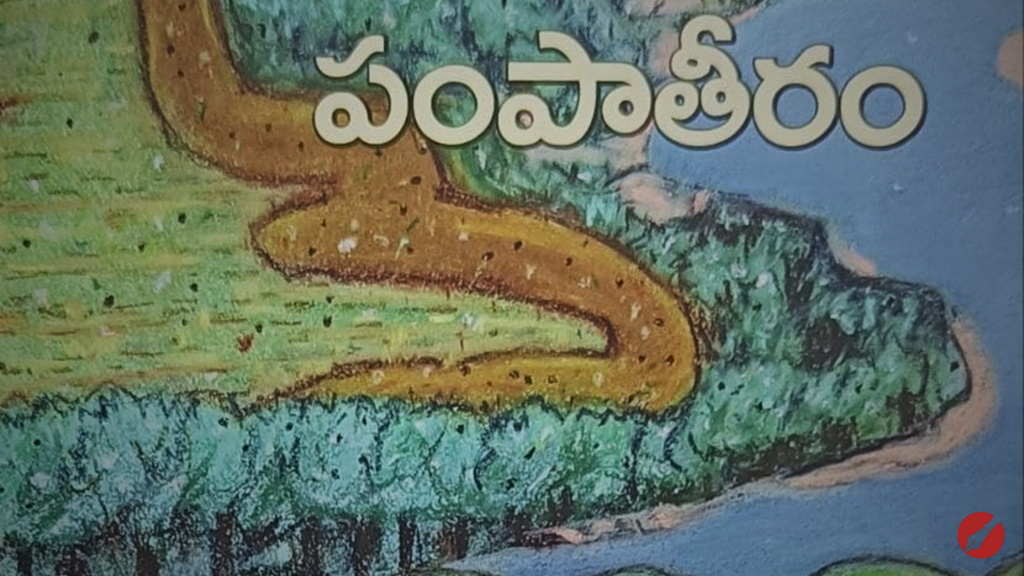
But in popular imagination in the Telugu states, Sabari is a powerful ordained devotee, remembered first among all devotees, alongside Mahadevi, Mira, and Tyagaraja. Valmiki gave her little space, yet she occupied so much of the popular imagination. When I read the Aranyakanda, the forest was beautiful and alive, and Sabari was a very lonely woman waiting for Rama. Why did Valmiki write so little about her? That bothered me.
As a tribal woman and forest dweller, she may have had issues with the aggressive nature of kingdoms entering the forest, what with deforestation, building cities, spreading their civilization, and considering forest-dwellers uncivilized. I imagined it like contemporary times. She was waiting for Rama because she had heard that he had left his kingdom, which is not a small thing, then or now.
Rama could have fought his father or brother and become king. Instead, he came to the forest. That may have interested Sabari: that someone was leaving power to live in the forest, to learn how to coexist with all living beings, and to be responsible toward nature. So she waited. Rama came, but he couldn't understand, because he came to spread the Aryan Dharma in the southern part of India. He refused to hear Sabari's words and didn't accept her views. Sabari was disappointed.
AM: That project of modernizing, of civilizing, is still going on today. There is a major lack of eco-critical or eco-fiction perspectives on mythology; we usually have feminist or caste critiques, rarely eco-fiction or eco-critical discourse. Was that something you had in mind?
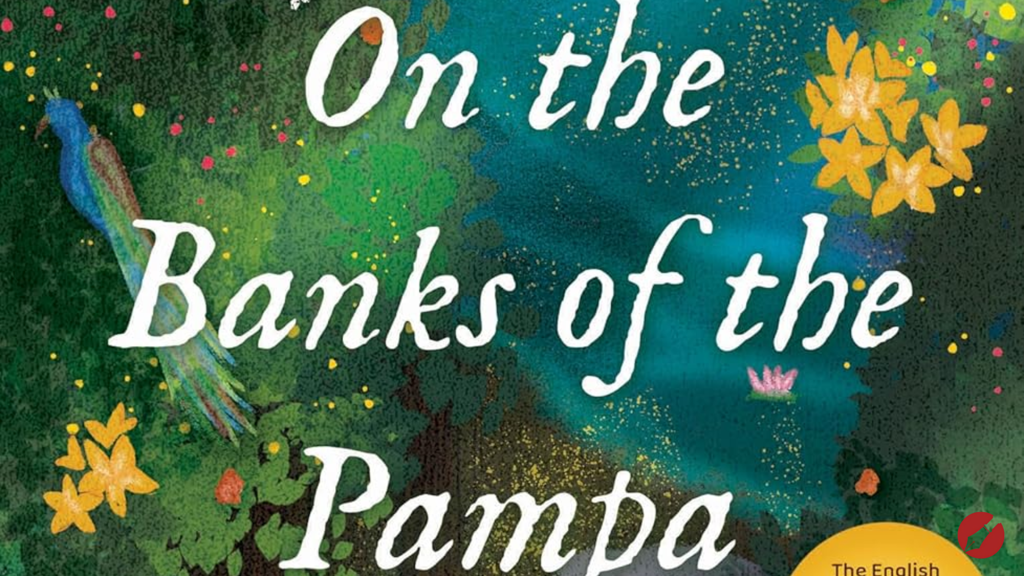
Volga: In the Ramayana, the forest is described very beautifully. Aranya is a major part of the Ramayana, and Valmiki named it Aranyakanda, not Vanavasakanda, because the forest was so important to him, even though it was the Vanavasa period. Valmiki was a very eco-friendly writer in that sense. Wherever he had a chance to describe nature, he did so in a very beautiful manner.
AM: You have a sort of unofficial trilogy giving voice to ignored mythical women: The Liberation of Sita, Yashodhara, and now On the Banks of the Pampa. Beyond the obvious parallel, do you see a common sensibility running through these books?
Volga: In all three books, the women portrayed had little space in history or literature. We know Yashodhara’s name, that Siddhartha left her seven days after her delivery, and that when he returned, Rahul was sent to him. But that’s the only three or four things we know. These unknown characters deserve to have their perspectives and voices recorded.
I don't like women projected as victims, portrayed as always weeping, always suffering. I want women's agency. They are agents of change. Yashodhara is a path-maker for women entering the spiritual world. Sabari was the first tribal woman to assert the rights of forest dwellers. I want to make their agency central, not just their victimhood. They suffered, but people who suffer are the ones who struggle. Without suffering, there is nothing to struggle for. Siddhartha had a wonderful life and was still not happy. Sita, Ahalya, and Sabari suffered, but they retained their agency. They struggled against patriarchal forces. That is the parallel.
AM: That victimhood framing strips them of their agency: it makes them less of a person, inferior to men, without their own choices.
Volga: You have to subvert their character.
AM: You've talked about moving away from Marxist literature, but I'm curious how your background and inspirations play into your writing today.
Volga: I am a Marxist at heart. That reading gave me an easy way to understand feminist theory. After understanding political economy from Marx, you can readily enter into feminist political economy, which also includes the reproductive aspect that Marx and Engels largely didn't address. They focused on production and productive forces and gave very little space to reproduction, sexuality, and women's labour. Feminism entered that area. The Marxist readings and practice in my life gave me an easy way into feminism and other theories. I still draw heavily on Marxist philosophy and call myself a socialist feminist.
That theoretical background helps me understand things in a particular way, and that informs my writing.
AM: What are you currently reading? Are you working on anything?
Volga: I'm reading a lot of new Telugu literature, short stories especially. The latest is Aravind's 90's Kid Musings, about his childhood memories in a tanda (an Adivasi settlement) in the '90s, and how the reforms of that decade touched even that very backward place.
Another is a short story anthology by Rubina titled Jamili Pogu, about modern women entering entrepreneurship and encountering a different kind of patriarchy, not exactly capitalist or feudal. Many Telugu writers are writing good books now, and I read them to understand what this generation thinks about.
In English, I read Nautch Boy by Manish Gaekwad and liked it very much. Rahul Bhattacharya gave me his latest book (Railsong) before publishing to write a blurb.
I’m writing a novel about the contemporary violence women face: sexual harassment in the workplace, and a different kind of violence through technology and social media. Women are entering into it without knowing the consequences and the psychological effects. How they are drawn in, how they suffer, and how they might live with it or be liberated from it, that is the theme. It's a real challenge because I have to understand so much about technology, how fundamentalists are using it, how women enter unknowingly and suffer. We can't avoid it, we can't escape it.